The Health Benefits of Indian and Thai Cuisine
It is consistently voted Britain's favourite dish – not fish and chips, or roast beef and Yorkshire pudding, but curry. Indeed, we are a nation of curry lovers, with almost nine in ten of us enjoying them and tucking into one, on average, at least five times a month.
Chicken tikka masala, butter chicken and korma – at the milder end of the spectrum – regularly top popularity polls. And with an estimated 8,000 Indian restaurants across the UK, alongside around 2,000 Thai takeaways, there is an almost bewildering variety to choose from.
While many curries admittedly pack a hefty calorific punch – and can be high in fat and salt to boot – the good news is that, with a little care, they can also be a nutritious option.
Vince Kelly, a culinary lecturer at Capital City College and a member of Culinary Medicine UK, told the Daily Mail he regards Indian food as among the healthiest takeaway choices. He said: 'These dishes are rich in spices with anti-inflammatory properties, as well as vegetables, pulses and lean proteins such as chicken. One of the best things about an Indian takeaway is the array and vibrancy of spices and colour it brings to the plate. If you've ever heard of the '30 different plants a week' rule, that doesn't just include fruit and vegetables but also spices – and having a portion of Indian food definitely contributes to the variety in our diet.'
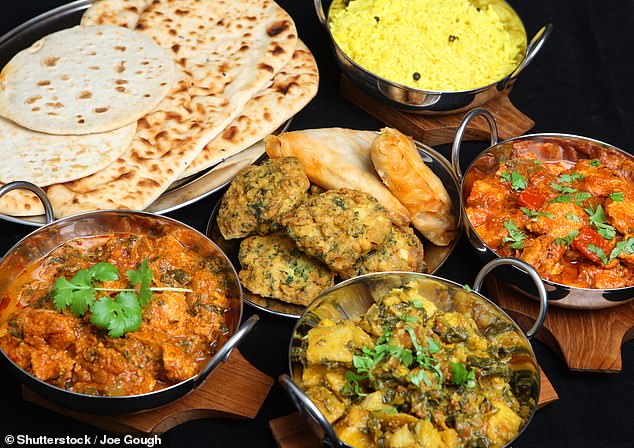
Emily Lenoir, a Registered Associate Nutritionist (AfN) and Behaviour Change Coach at Voy, echoes the sentiment, adding that Indian food's natural reliance on pungent, antioxidant-rich spices such as turmeric, cumin, ginger and fenugreek has been scientifically proven to benefit our health. She told the Daily Mail: 'Curcumin in turmeric may help reduce inflammation, ginger can support gut health and cardamom may aid blood sugar regulation. Together, these spices enrich meals and, when used regularly, contribute to long-term wellbeing. Equally important is Indian cuisine's reliance on fresh vegetables, lentils, legumes and whole grains, providing fibre, plant-based protein and micronutrients such as iron, folate and zinc.'
However, other nutritionists regard Thai cuisine as the healthier option. 'Thai food is a vibrant blend of herbs, spices and fresh ingredients that makes it one of the more flavourful – and potentially healthier – takeaway options,' says Kerry Beeson, a Nutritional Therapist from meal service Prep Kitchen. 'You'll also find some authentic Thai vegetables like pea aubergines, which are full of fibre, antioxidants, potassium and magnesium. Compared to typical Western fast food, Thai dishes are often lower in saturated fats and made with aromatic herbs like coriander, garlic and ginger.'
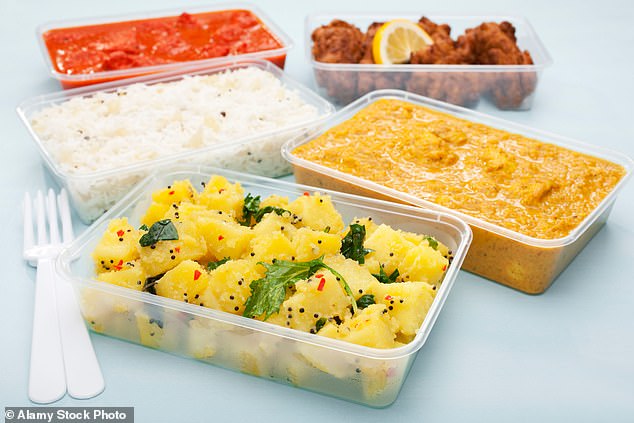
'Garlic is a Thai staple – it's a natural antimicrobial and prebiotic, and great for gut health. Thai food is also flavoured with spicy ginger, which helps reduce inflammation and soothe digestion, and the cuisine's signature spice: the chilli pepper. Chillies contain capsaicin, which improves circulation and blood flow.'
However, before you take the experts' enthusiasm for Indian food as carte blanche to tuck into a takeaway curry every night, Mr Kelly is keen to stress that when it comes to ordering in, you can't be sure you're getting the cuisine's full benefits – but you can be sure you're getting a lot of fat. Much Indian food relies heavily on coconut oil, cream and ghee – a form of clarified butter.
The NHS advises that no more than 35 per cent of our daily calories should come from fat – around 30g per day for men and 20g per day for women – with a maximum of 11 per cent coming from saturated fat. Fat is vital for helping the body absorb fat-soluble vitamins A, D and E, and is also converted into energy. However, eating too much fat can lead to obesity, which a growing body of scientific research has linked to a range of serious, life-limiting conditions, including heart disease and dementia.
So here's how to pick the healthiest options, according to nutritionists.
Vegetable Curries
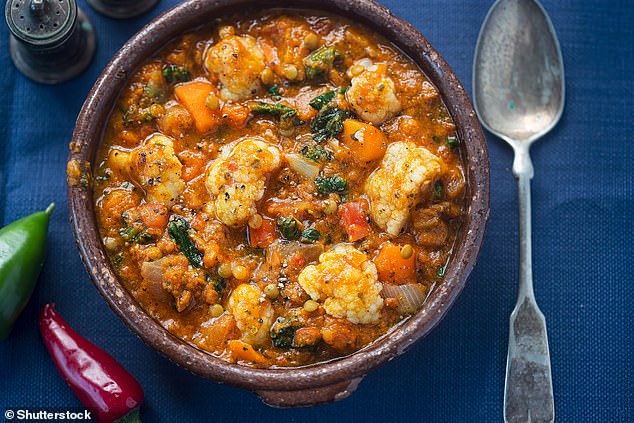
Swapping meat for fish or vegetables is one of the experts' top tips for making your Indian takeaway healthier – and it also opens the door to some of the country's most celebrated dishes. It's estimated that nearly 40 per cent of the Indian population is vegetarian, so when it comes to vegetable-based cooking, they truly know their stuff.
Mr Kelly said: 'A baji – not to be mistaken for a deep-fried bhaji – is a sautéed or lightly stewed mix of vegetables cooked with spices rather than batter and oil. This gives you gut-boosting fibre, volume and micronutrients without the heavy calories of richer curries.' Ms Lenoir agrees, naming chana masala – a dish made from chickpeas simmered in tomato and onion – as her top pick. She added: 'Tomato-based curries like vegetable jalfrezi (300–450 calories per serving) are rich in antioxidants such as vitamin C. Meanwhile, mixed vegetable curries offer a rainbow of nutrients that support immune and metabolic wellbeing.'
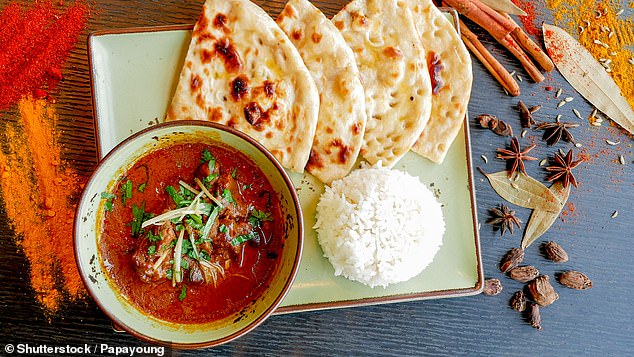
'Unlike cream-based curries, daals are water-based and naturally lower in fat.'
Daals
Daals are a form of soup or stew made from dried, split pulses such as lentils, peas and beans, and flavoured with an array of spices. Usually served with rice or roti – a traditional flatbread – they are a staple food across the Indian subcontinent and within the wider diaspora. One of the best-known varieties, dal tadka – a spiced lentil curry that is naturally high in protein and fibre while being low in saturated fat – typically contains around 280 calories per serving. Mr Kelly also speaks highly of dal, not least because they are 'one of the most climate-friendly choices' on the menu. He said: 'Lentils provide plant protein plus soluble fibre that slows digestion, improves fullness and benefits cholesterol.'
Bhuna
If you're worried that curries are off the menu, don't fret – you can still indulge, as long as you steer clear of creamy and oily sauces. 'Creamy curries like chicken korma or butter chicken can reach 800–900 calories per serving, mainly from cream, butter and nuts,' explained Ms Lenoir. 'Similarly, lamb rogan josh is flavourful but often higher in saturated fat when prepared with fattier cuts of meat.' Mr Kelly agrees, citing both as nutritional no-nos. 'The most calorie-dense items on the menu are those with cream-, butter- and sugar-laden gravies, combining high levels of saturated fat with curry pastes that can also be rich in refined sugar.' This combination can drive up saturated fat intake and trigger spikes in blood sugar. Dishes that involve cooking lamb long and slow can also be calorific bombs – a lamb rogan josh can reach around 600 calories per serving. This is because lamb releases and retains fat as it cooks and is often served in thick, oil-based gravies, making these dishes especially rich. But if you can't skip a curry altogether, Mr Kelly advises choosing a bhuna, which usually comes in at around 350 calories per portion.
What is referred to as a 'dry curry', the base of the dish are fried down onions and tomatoes, with meat or vegetables added in. To finish, it is baked in the oven, causing the sauce to cling to the meat rather than leaving it floating in oil or cream. 'This 'reduction instead of enrichment' technique creates intensity without adding fat,' explained Mr Kelly. 'You get robust flavour at a lower calorific cost.'
Saag Aloo
One of the most famous Indian dishes of carefully spiced potato and spinach, saag aloo is a winning choice when ordering in. It uses modest amounts of oil, and is flavoured with antioxidant-packed spices cumin, mustard and asafoetida—made from fennel root—along with a generous dose of garlic and ginger. Mr Kelly said: 'The leafy greens supply iron, folate and antioxidants while the fibre from both the spinach and potato moderates blood sugar absorption. It is flavour dense without being calorie dense.' You can expect a portion of saag aloo from a takeaway to clock in at no more than 350 calories.
Massaman Curry with Chicken
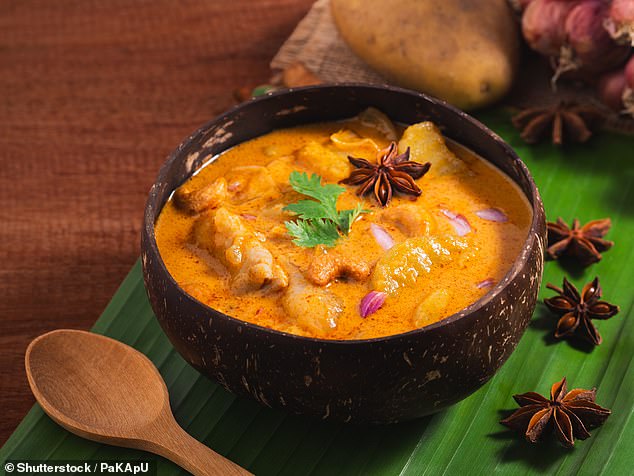
Vibrant curries are a staple of any Thai menu, but one in particular should be enjoyed in moderation. A major ingredient in Thai cuisine is coconut milk, making many of the creamier dishes suitable for vegans and people with dairy allergies and intolerances. 'It's also rich in medium–chain fatty acids like lauric acid and caprylic acid, which are converted into ketones that the body can use for energy without affecting blood glucose,' says Ms Beeson. 'They also have antimicrobial and anti–inflammatory properties.' Ms Beeson estimates that a typical serving of a massaman curry, which is made with a dense combination of coconut cream, potatoes, and peanuts, can have 540 calories per serving, and 20g of fat. 'Whilst it's full of Thai flavours, it's one of the most calorific Thai curries due to its high fat and carb content, and often lowest in vegetables,' she says. 'It's usually served with white rice, which can significantly increase the calorie content (by about 200 calories) and offers little in the way of nutritional value.'
Read more
Could your beloved Indian takeaway actually be one of the healthiest options around, thanks to vibrant spices, fresh vegetables, and lean proteins?
Can the common spice in your curry be a hidden weight-loss secret?
Could eating the notorious 72-chilli curry with undiscovered Bangladeshi spices be risking more than just your taste buds?
Is your favorite Chinese takeaway dish secretly a high-calorie, sodium bomb that puts your heart and body at risk?
Have portion-controlled meals left Premier League stars resorting to craving curries and Chinese takeaways?